
Fashion’s biggest global brands are quickly changing the way they source. In 2026, apparel sourcing decisions are no longer based solely on manufacturing cost. They are increasingly based on reliability, production visibility, product quality and long-term sourcing stability. India is emerging as a stronger sourcing destination for apparel with brands still trying to balance shifting consumer demand, seasonal pressures and supply chain complexities. India’s integrated textile ecosystem, skilled workforce, established manufacturing clusters and growing export capabilities are helping brands build more flexible and efficient sourcing models. Apparel sourcing in India is increasingly about building the right relationships to help overseas buyers manage better development, production, quality and delivery.
Why Global Brands Choose India for Apparel Sourcing
India has become one of the most complete apparel sourcing ecosystems in the world.
One of the biggest advantages is vertical integration.
Unlike fragmented sourcing markets where fabric, development, and production often happen across different countries, India offers access across multiple stages of the value chain:
- Cotton and fibre sourcing
- Yarn manufacturing
- Fabric development
- Dyeing and processing
- Garment production
- Export support
This integrated structure helps brands improve speed and coordination.
For instance, if a retailer is developing a women’s casualwear collection, fabric development and garment manufacturing can often be managed within the same sourcing network rather than across separate suppliers.
Another big advantage is skilled labour.
Execution is a huge part of apparel manufacturing. Fit, stitching, finishing, detailing, consistency – all need experienced teams.
India continues to offer strong manufacturing capability across categories including:
- Womenswear
- Kidswear
- Casualwear
- Knitwear
- Woven apparel
Manufacturing hubs such as Noida/NCR play an important role in this growth.
These regions bring together factories, fabric suppliers, washing facilities, logistics providers, and export infrastructure in one connected ecosystem.
For overseas buyers, this creates easier coordination and greater production flexibility.
Crucial Steps in the Bulk Buying Process
Successful bulk apparel manufacturing starts long before the actual production.
Many sourcing problems arise from rushed development stages.
Structured processes help mitigate those risks.
Sample Development
Everything begins with development.
Buyers usually share:
- Design references
- Mood boards
- Existing samples
- Product expectations
Development teams convert ideas into workable products.
This stage helps confirm fit, styling, and manufacturing feasibility.
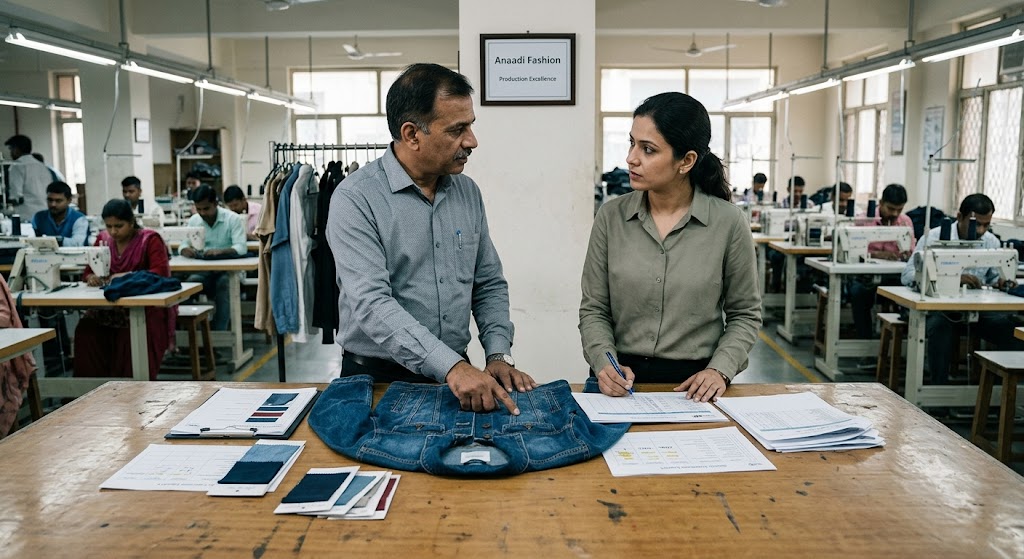
Tech Pack Assessment
A strong tech pack creates production clarity.
This typically includes:
- Measurements
- Construction details
- Trims
- Label requirements
- Packaging instructions
Clear documentation reduces interpretation gaps later.
Fabric Approval
Fabric decisions directly affect product quality.
Before production, buyers typically approve:
- Fabric composition
- Hand feel
- Shade
- Performance expectations
- Print developments
Early approval helps reduce production corrections.
Production Planning
After approvals, production timelines are finalized.
Typical production planning includes:
- Raw material booking
- Cutting schedules
- Capacity allocation
- Quality checkpoints
- Delivery planning
This stage becomes especially important for overseas fashion sourcing where shipment timelines affect retail launches.
Managing Quality and Lead Times from Overseas
A major issue for foreign buyers is low visibility throughout the manufacturing process.
Due to a lack of coordination locally, even minor problems may become costly once shipped.
A specialized clothing buying house in India would serve well in such cases.
Buying houses act as local sourcing partners and support buyers throughout production.
Their responsibilities often include:
- Factory coordination
- Development monitoring
- Quality management
- Shipment tracking
- Issue resolution
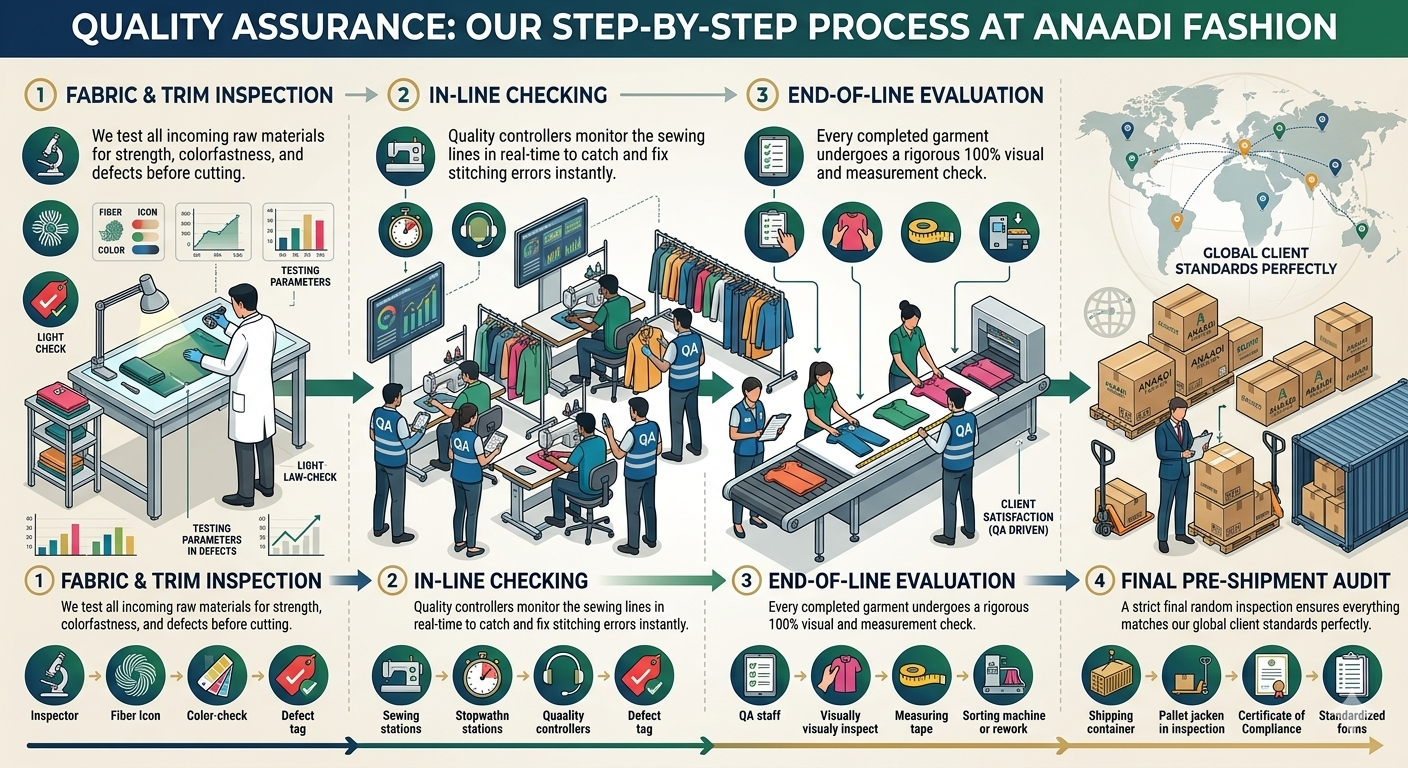
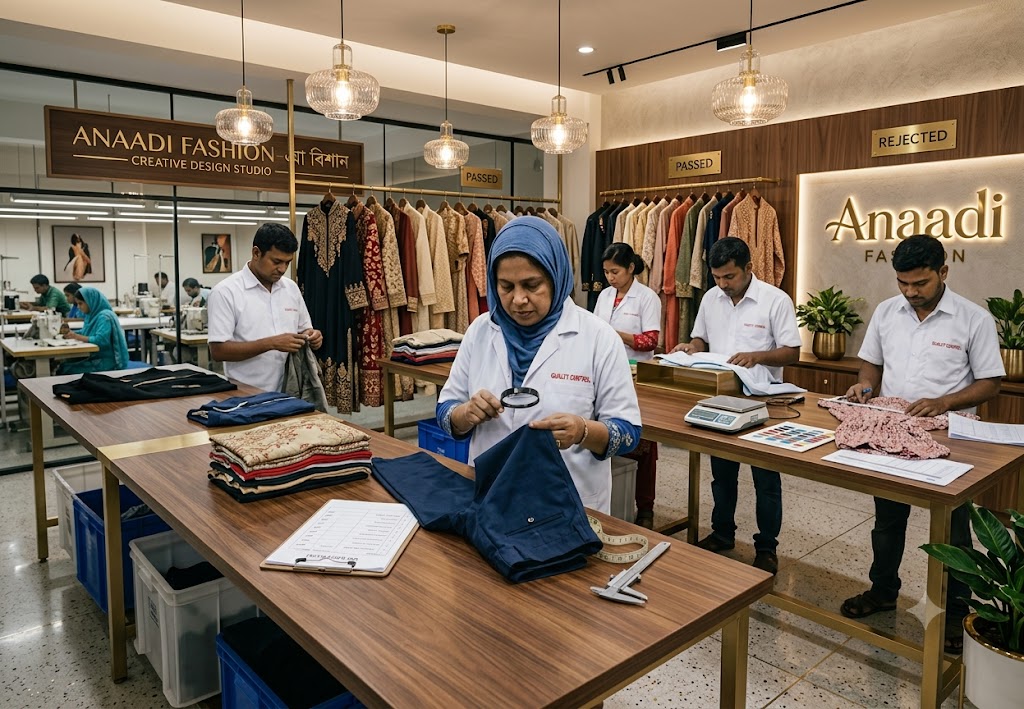
Quality control is especially important.
Many apparel buying houses apply structured inspection processes based on AQL (Acceptable Quality Limit) methodology.
AQL inspection creates a measurable way to evaluate shipment quality before dispatch.
Rather than checking products randomly, inspections review defined samples and assess:
- Measurements
- Construction quality
- Fabric appearance
- Label accuracy
- Packing consistency
For example:
If a buyer approves a women’s dress with exact measurement tolerance and packaging requirements, inspections confirm that final production stays aligned.
Lead-time management also becomes easier when sourcing activities are coordinated centrally.
Buyers gain:
- Faster communication
- Better production tracking
- Improved shipment readiness
Partner with a Trusted Apparel Sourcing Agency
India offers enormous sourcing opportunities.
But navigating a large manufacturing ecosystem requires local knowledge and execution.
At Anaadi Fashion, we support buyers through the complete sourcing journey—from concept development to shipment readiness.
Our capabilities include:
- Product development
- Fabric sourcing coordination
- Vendor management
- Bulk apparel manufacturing support
- Quality monitoring
- Production follow-up
- Export coordination
Instead of just being a source of supply, we wish to be a sourcing partner who assists the buyers in making their operations simpler.
Whatever the case whether it’s for seasonal developments, large-scale production schemes or sourcing needs, the priorities for us always remain quality, communication, and reliable deliveries.
Conclusion
Fashion apparel sourcing in India is going through a shift from being purely a function of cost savings to being a strategic option for fashion brands around the world. The current trend requires increased visibility, better development processes, better production capability, and flexibility under varying market situations. The presence of a complete textile industry in India, skilled labor, and production centers makes it easy for brands to perform sourcing activities in a smoother way and overcome any difficulties involved in the process. Due to efficient development processes, good quality processes, and production management, sourcing becomes much easier within international markets.