
When overseas buyers source clothing from another country, quality is one of their main concerns. A good sample does not always ensure that bulk production meets the same standard. This is why quality control should not be seen as just a final inspection; it should be integrated into every step of production.
A trustworthy garment factory follows a clear quality process, starting from raw material approval to final packing. For buyers, understanding these quality standards helps decrease returns, prevent delays, and protect their brand’s reputation.
Whether you are sourcing small collections or large seasonal volumes, knowing what quality checks occur in a factory can make a big difference.
What to Look For in a Garment Factory’s Quality Control
Every overseas buyer should clearly understand the minimum quality standards expected from a manufacturing unit. A professional garment factory should not rely only on visual checks. Instead, it should measure quality through testing, inspections, and controlled production processes. Here are some of the most important checkpoints.
Buyers should ask:
Is shrinkage tested before cutting?
Is shrinkage tolerance recorded?
Are patterns adjusted accordingly?
Colour Fastness Evaluation
Colour consistency is critical for apparel quality. A proper garment factory should evaluate how fabric reacts to:
- Washing
- Rubbing
- Perspiration
- Light exposure
Weak colour fastness can lead to fading, staining, and customer complaints. Testing early prevents expensive corrections later.
Seam Strength Verification
Even the best fabric will not perform if the stitching quality is subpar. Seam testing, the process to evaluate a seam’s durability, is conducted on a garment’s finished construction to see if it will stand up to use and laundry.
- Stitch density
- Thread quality
- Seam slippage
- Construction durability
Quality does not come out from the finishing table. Quality checks are routinely done inline in a professional factory to locate flaws before they run through production.
Typical checks include:
- Measurement accuracy
- Stitch appearance
- Construction consistency
- Label placement
- Fabric defects
Approved measurements should stay the same during production. A quality-focused factory does regular measurement checks to make sure garments stay within tolerance limits. Consistent sizing builds customer trust and lowers return rates.
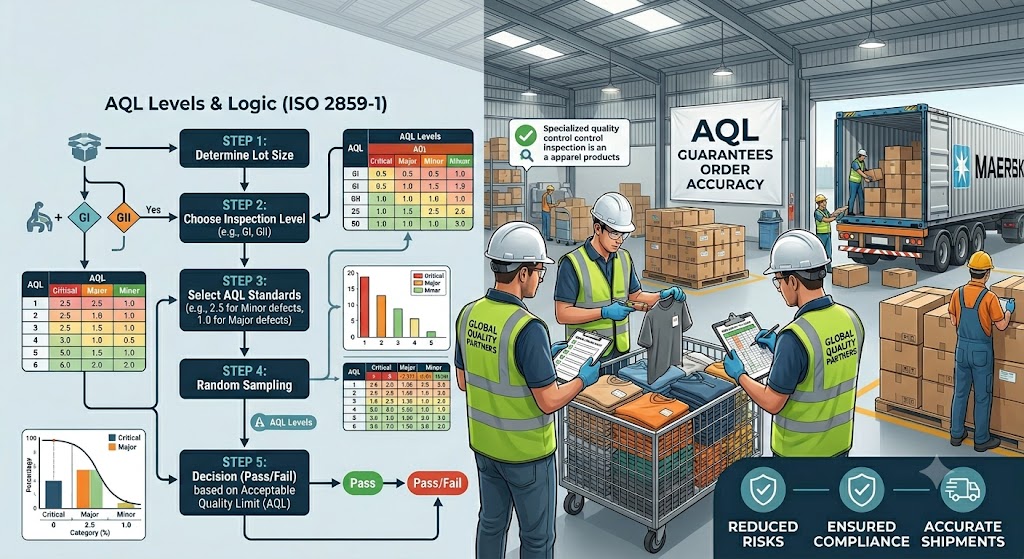
What Does AQL 2.5 Mean?
Most factories, especially for apparel, use AQL 2.5. This is not 2.5% of the garments you can accept to be defective. It refers to sampling garments out of production, examining a particular number of garments, and testing them against set acceptance criteria for defects. If the result meets the acceptance criteria, the goods will pass; otherwise, action may be required.
DUPRO – During Production Inspection
DUPRO is a During Production Inspection, often done in the middle stage of production. The goal is to catch issues before the whole lot is manufactured.
Typical DUPRO checkpoints include:
- Fabric appearance
- Sewing quality
- Measurement control
- Construction details
- Packaging preparation
FRI – Final Random Inspection.
The last random check is carried out after completion of production & packaging/ readiness for shipment.
Inspectors select cartons randomly and verify:
- Quantity accuracy
- Appearance quality
- Measurements
- Packaging compliance
- Label and barcode requirements
This stage acts as the final approval point before shipment. Pairing DUPRO with FRI allows greater production control while reducing unanticipated quality problems.
Why Clothing Production Audits Matter
Quality inspections alone are not enough. Clothing manufacturing audits support analysis of a system’s aptitude to generate good quality.
- Process controls
- Documentation practices
- Factory capability
- Production planning
- Corrective action systems
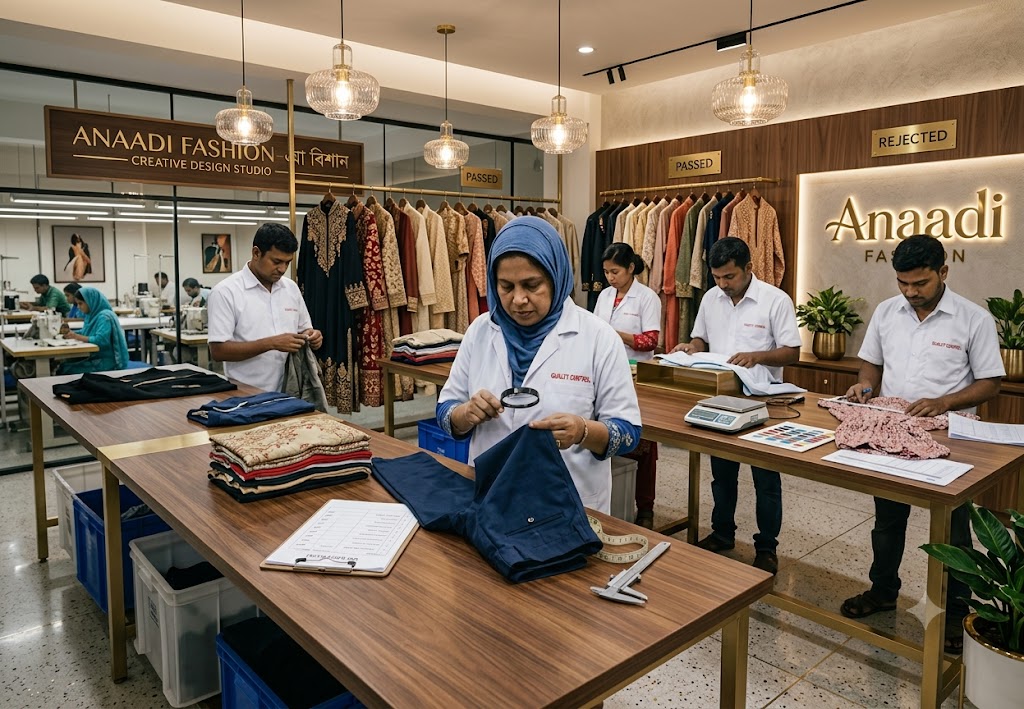
How Anaadi Fashion Guarantees Zero-Defect Shipments
Step 1: Raw Material Inspection. Every production cycle starts with checking incoming materials.
The team verifies:
- Fabric quality
- Shade consistency
- Construction parameters
- Trim approvals
- Only approved materials move into production.
Step 2: Development and Pre-Production Validation
Before bulk manufacturing begins, samples and production approvals are reviewed carefully.
- Measurements
- Construction details
- Buyer comments
- Technical requirements
Step 3: Inline Production Monitoring
During production, quality teams conduct regular inline checks. This allows immediate correction and prevents defects from repeating across large quantities.
Step 4: Multi-Level Final Inspection
Before dispatch, finished garments undergo layered verification that includes:
- Appearance review
- Measurement checks
- Packing verification
- Carton validation
- Shipment readiness confirmation
Step 5: Final Packaging and Container Loading Review
The final stage focuses on shipment accuracy. Before container loading, the team confirms:
- Quantity reconciliation
- Packaging standards
- Label accuracy
- Loading condition